
Structural Integrity and Load Distribution Analysis of Tubular Welded Frame Scaffolding: Compliance with OSHA 1926.451 and ANSI/SSFI SC100 Standards
In industrial access and heavy-duty construction, the Tubular Welded Frame Scaffold operates as a prefabricated rigid-frame system. Unlike traditional tube-and-clamp configurations, the welded frame utilizes a vertical orientation of high-yield steel tubing (Q235 or Q345) combined with transverse horizontal members to create a stabilized geometric module. This analysis examines the technical specifications, load-bearing mechanics, and safety tolerances of these modular units in compliance with international engineering benchmarks.
1. Material Properties and Geometric Configuration
The primary structural components are manufactured from Electric Resistance Welded (ERW) steel tubing. The mechanical performance is governed by the carbon content and the wall-thickness-to-diameter ratio, ensuring optimal rigidity under compressive stress.
- Vertical Standards: Typically Ø 42mm or Ø 48.3mm with wall thicknesses ranging from 2.0mm to 2.5mm.
- Yield Strength (fy): Minimum 235 MPa (Q235) or 345 MPa (Q345) to ensure elastic deformation limits are not exceeded under peak gravitational loads.
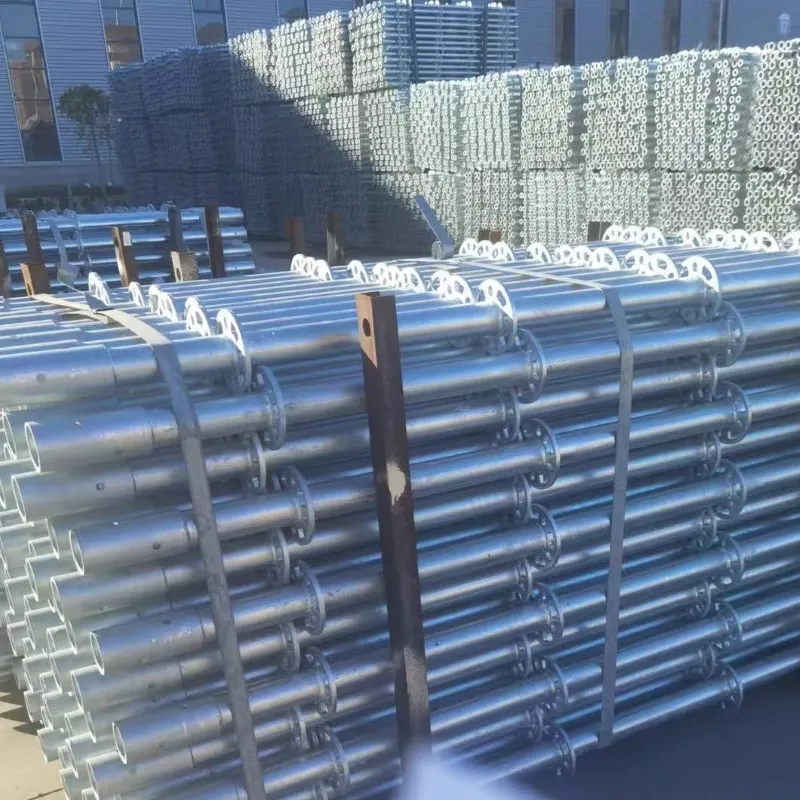
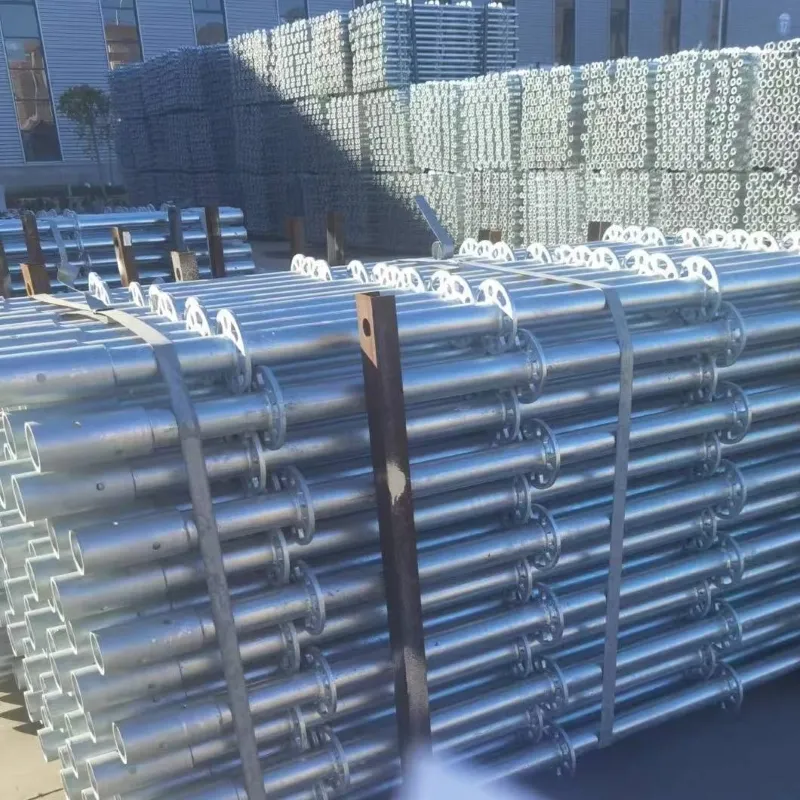
- Surface Treatment: Hot-dip galvanization (HDG) per ASTM A123, providing a zinc coating thickness of > 60 μm to prevent oxidation and structural degradation in corrosive industrial environments.
2. Load Evaluation and Structural Stability
The stability of a welded frame system is contingent upon the slenderness ratio (L/r) of the vertical members and the integrity of the cross-bracing. The integration of welded rungs enhances the frame's resistance to racking forces.
- Gravity Loads: Designed to support a rated capacity (Dead Load + Live Load) exceeding 25 lb/ft² (Light Duty) to 75 lb/ft² (Heavy Duty) as per SSFI classifications.
- Connection Mechanics: The use of gravity-lock pins or toggle pins ensures the positive engagement of vertical tiers. The welded joints—executed via Carbon Dioxide Gas Shielded Arc Welding—must demonstrate full penetration to withstand shear forces at the rung-to-standard interface.
Technical Specification Comparison Table
| Parameter | Specification (Modular Welded) | Tube & Coupler System | Industry Standard |
|---|---|---|---|
| Material Grade | Q235B / Q345B Steel | Q235 Carbon Steel | ASTM A500 / EN 10219 |
| Joint Type | CO2 Shielded Welding | Mechanical Friction Couplers | AWS D1.1 (Welding) |
| Assembly Velocity | High (Prefabricated Units) | Low (Individual Components) | N/A |
| Flexibility | Fixed Geometric Increments | Infinite Adjustability | N/A |
| Max Vertical Load | Up to 2,500 kg per Frame | Variable by Coupler Torque | OSHA 1926 Subpart L |
3. Durability and Lifecycle Maintenance
The service life of tubular welded frames is determined by the corrosion fatigue limit. Unlike bolted systems, the lack of mechanical fasteners in the main frame reduces the risk of vibration-induced loosening.
- Inspection Protocol: Daily checks must focus on weld bead integrity and tubular concentricity. Any frame exhibiting a deviation from verticality (plumbness) exceeding 1/8 inch over 3 feet must be decommissioned.
- Maintenance: Removal of concrete slurry and chemical contaminants is essential to maintain the structural weight specifications and surface visibility for crack detection.
4. Regulatory Compliance and Safety Architecture
To satisfy OSHA 1926.451(g) and ANSI/SSFI SC100-5/05, the following architecture is mandatory for all site deployments:
- Guardrail Systems: Top rails must be installed at 38 to 45 inches above the platform surface, capable of withstanding a 200 lb lateral force.
- Access: Integrated ladders or attachable stair towers must be utilized; climbing of cross-braces is strictly prohibited.
- Base Plates: Screw jacks or fixed base plates are required to distribute the point load across mudsills, preventing localized soil failure.
5. Industrial Application Scenarios
The high-rigidity-to-weight ratio of welded frames makes them the optimal choice for specialized industrial applications:
- Masonry and Facade Work: Providing a consistent, wide platform for high-density material staging.
- Refinery Maintenance: Rapid deployment during turnaround windows where modularity reduces downtime.
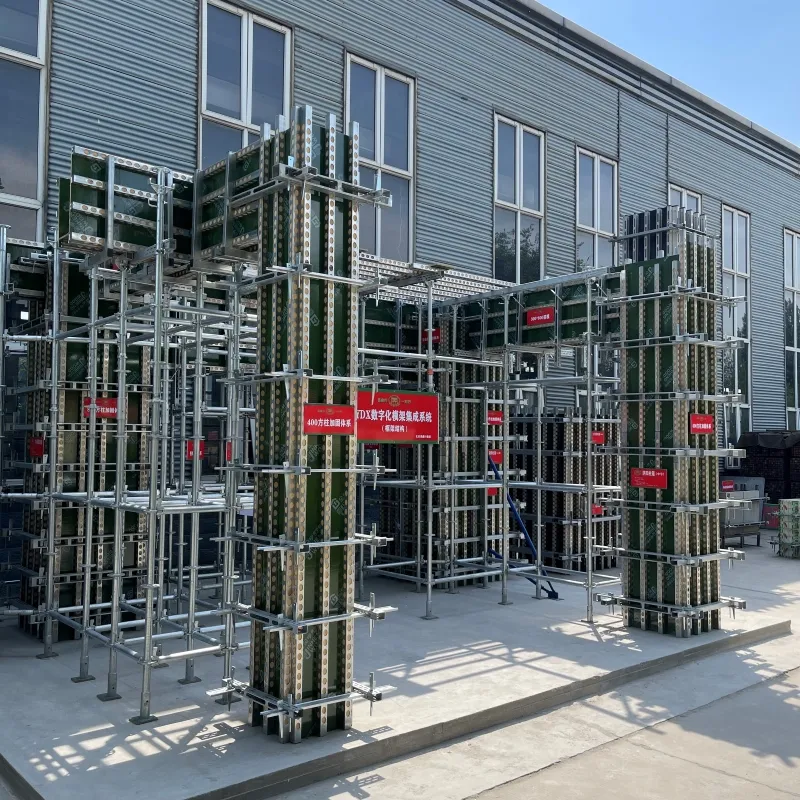
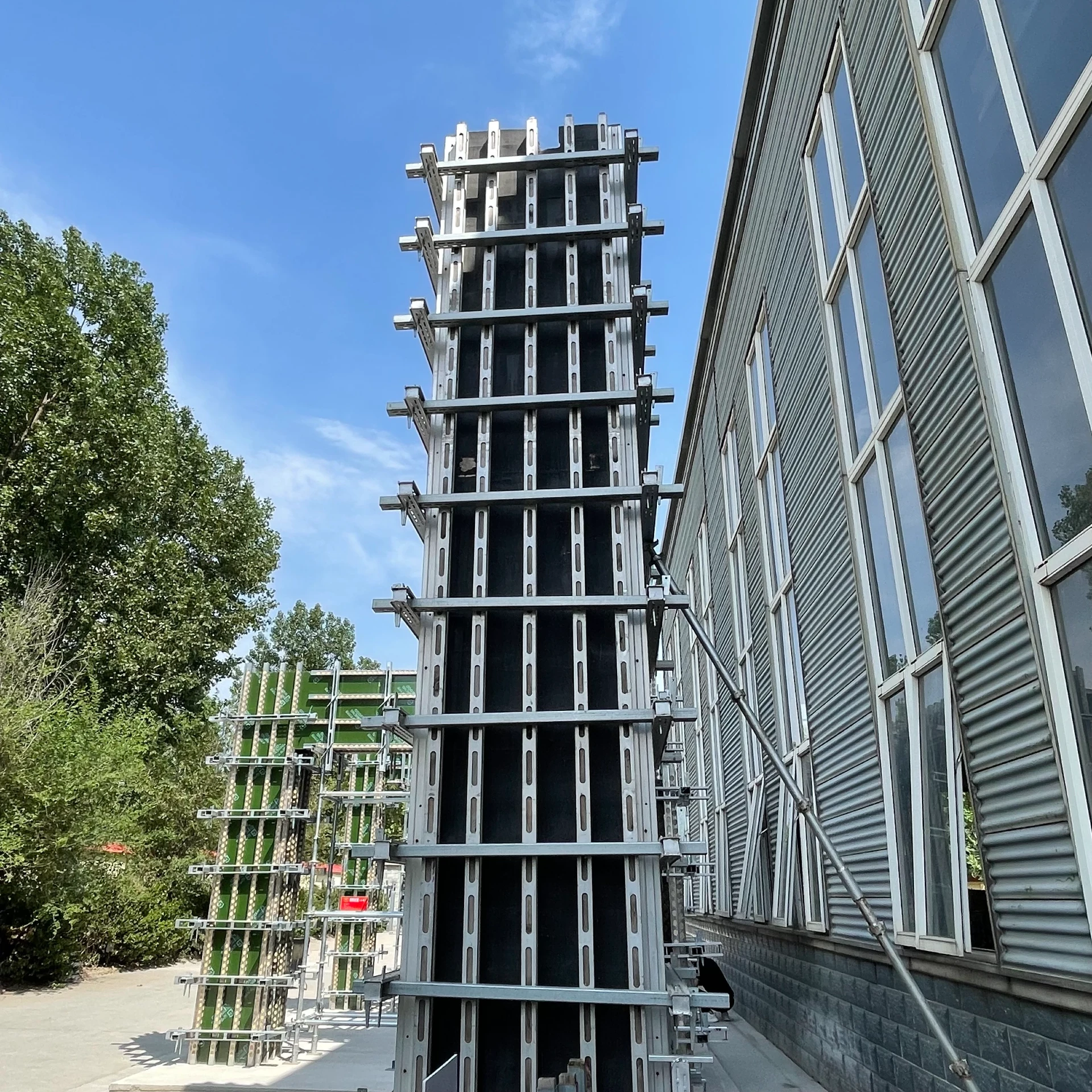
- Infrastructure Shoring: Utilizing high-load frames to support temporary formwork during heavy concrete casting.
-
Efficient Modern Shuttering System Concrete Walls for ConstructionNewsApr.16,2026
-
High Efficiency Shear Wall Shuttering Systems for ConstructionNewsApr.09,2026
-
Comprehensive Guide to Shear Wall Formwork Systems and Construction TechniquesNewsApr.07,2026
-
Choosing the Optimal Retaining Wall Shuttering System for Construction ProjectsNewsApr.04,2026
-
Optimizing Construction with a Reused Formwork Wall System for EfficiencyNewsMar.31,2026
-
Comprehensive Guide to Panel Wall Formwork for Modern Construction ProjectsNewsMar.28,2026
-
Optimizing Construction Projects with Advanced Modular Column Formwork SystemsNewsMar.26,2026