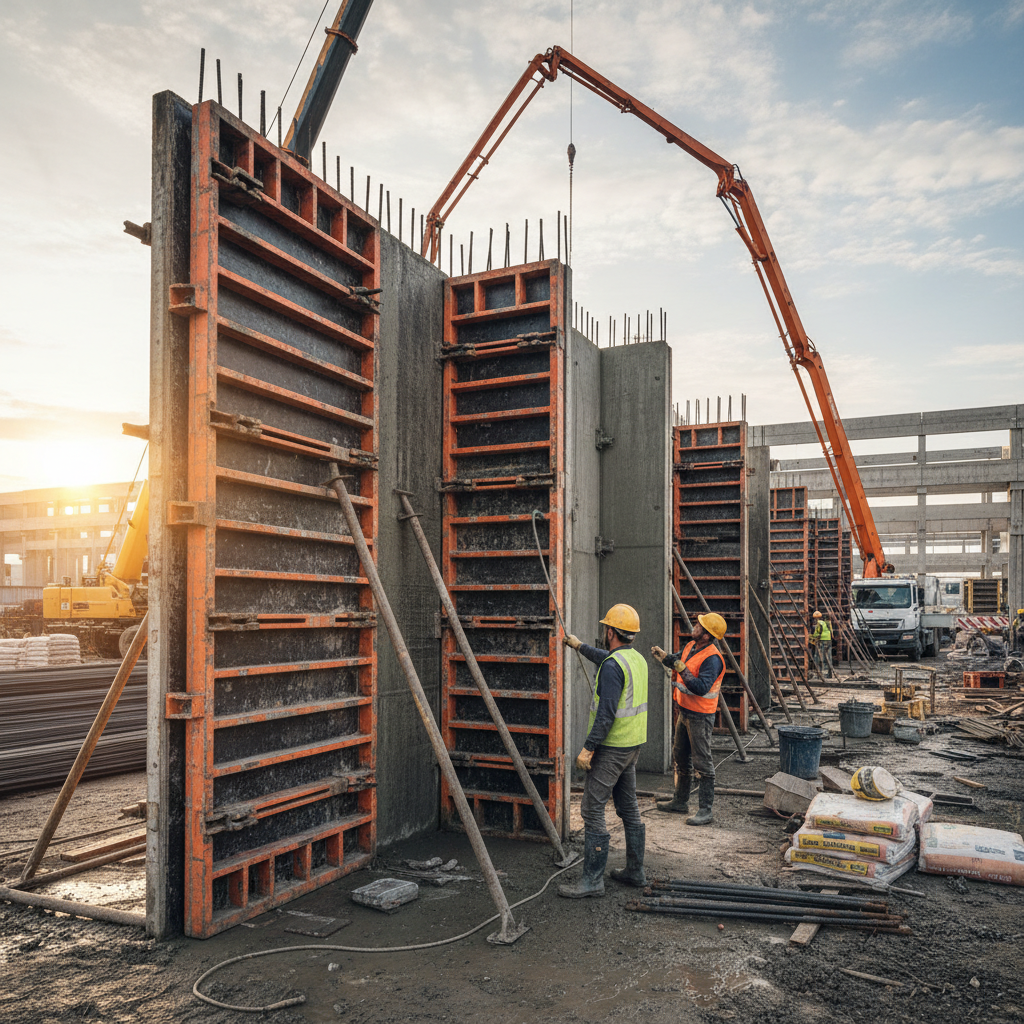
Selecting the right partners among various aluminium formwork companies is often the deciding factor in a project's structural integrity and delivery timeline. As urban construction shifts toward high-rise residential and complex public buildings, the demand for high-turnover, lightweight, and durable formwork systems has intensified.
Modern construction is no longer just about the raw materials used, but the efficiency of the support systems that shape them. The transition from traditional timber to advanced aluminium and reinforced steel keel systems reflects a broader industry movement toward waste reduction and labor optimization.
For procurement officers and site engineers, understanding the technical nuances between different reinforcement accessories and the capabilities of specialized manufacturers is essential to avoid costly installation delays and ensure structural safety.

Evaluating Technical Capabilities of Formwork Manufacturers

When analyzing aluminium formwork companies, the primary focus should be on their ability to integrate reinforcement systems with the main formwork panels. A manufacturer's value is not just in the aluminium extrusions, but in the precision of the joint connection designs and the durability of the accessories provided.
Technical proficiency is evidenced by the development of specialized components like the Horizontal Reinforcement Keel and the Early Release systems. These components solve the critical problem of formwork deformation under heavy concrete loads and allow for faster striking times without compromising the cured concrete's strength.
Yidingxing Technology Co.,LTD exemplifies this approach by focusing on the "new steel timber" and reinforced keel systems. By prioritizing technological innovation in clamp through-wall rods and beam clamps, they address the core pain points of labor intensity and material waste that plague traditional construction sites.
Core Advantages of Reinforced Formwork Systems
The primary value proposition of modern reinforced formwork lies in the balance between lightweight handling and structural rigidity. Aluminium-based systems, when paired with a robust steel keel, offer a synergistic effect: the aluminium reduces the physical burden on workers, while the steel ensures the form remains plumb and square.
From a cost-effectiveness perspective, the low investment requirement for high-turnover materials allows enterprises to reduce energy consumption and operational costs. The versatility of these systems—applicable to walls, tops, and columns—means a smaller inventory of parts can cover a wider range of architectural needs.
Furthermore, the simplicity of disassembly and assembly significantly accelerates the construction cycle. When a system is designed for quick installation, it directly reduces the rental duration of scaffolding and the overall project overhead.
Practical Applications in Modern Urban Infrastructure
The application of reinforced formwork varies significantly based on the structural element being cast. For instance, square column reinforcement requires a tailored approach depending on the column's dimensions. Small square columns (≤ 500mm) typically utilize a standard STEEL KEEL + I STEEL KEEL configuration to maintain stability without over-engineering.
For larger structural elements, the complexity increases. Columns between 600mm and 800mm require an 80 STEEL KEEL setup, while massive columns (900mm to 2500mm) necessitate H STEEL KEEL systems. In extreme cases where formwork tie rods cannot be used (900mm-1200mm), double-row configurations with tubes are employed to counteract the lateral pressure of the concrete.
These systems are now commonplace in major public buildings and residential high-rises. By implementing a systematic approach to reinforcement, construction firms can maintain strict tolerances across hundreds of floors, ensuring that the final structure aligns perfectly with the architectural blueprints.
Comparing Operational Efficiency and Material Turnover
To quantify the impact of advanced formwork, one must look at the turnover rate—the number of times a single set of panels can be reused. Traditional timber formwork often suffers from rapid degradation, whereas aluminium and steel keel systems are designed for longevity and high-frequency use.
The following metrics illustrate the typical performance gap between standard industry benchmarks and systems provided by specialized reinforced formwork companies, focusing on labor hours and material durability.
aluminium formwork companies Performance Metrics
The data indicates a significant improvement in installation speed and a drastic reduction in material waste. While the initial investment in high-quality steel keels and aluminium panels is higher, the cost per reuse drops sharply over the project's lifecycle.
Strategic Procurement and Installation Considerations
Procuring formwork is not a simple transaction but a strategic decision. Buyers must evaluate the compatibility of reinforcement accessories—such as the transverse reinforced keel and the new clamp through-wall rod—with their existing on-site machinery and labor skill levels.
One critical consideration is the 'Early Release' system. The ability to remove formwork sooner without risking structural failure can shorten a project's overall schedule by several weeks. This requires a high level of trust in the manufacturer's engineering standards and material quality.
Additionally, the logistics of transporting lightweight aluminium versus heavy timber should be factored into the ROI. The reduction in transportation costs and the ease of on-site handling contribute to a more sustainable and environmentally friendly construction process.
Future Trends in Structural Metal Formwork
The industry is moving toward increasingly modular and intelligent formwork systems. We are likely to see a greater integration of sensor-based monitoring within the reinforcement keels to detect concrete pressure in real-time, allowing for even more precise early release timings.
Environmental regulations are also driving the adoption of high-turnover materials. As the construction sector faces pressure to reduce its carbon footprint, the shift away from single-use timber toward infinitely recyclable aluminium and steel will likely accelerate.
Furthermore, the standardization of components—where a single keel system can be adapted for various column sizes through modular accessories—is expected to reduce lead times and simplify the supply chain for global infrastructure projects.
Decision Matrix for Selecting Formwork Solutions
Choosing the right system requires a comparison of the structural requirements against the available product categories. The following table provides a decision framework based on column size and reinforcement needs.
This matrix helps engineers determine which specific keel configuration is appropriate for their project's structural load and dimensional constraints.
| Column Size | Keel Configuration | Primary Use Case | Key Advantage |
|---|---|---|---|
| ≤ 500mm | Steel Keel + I Steel | Small Square Columns | Lightweight & Rapid |
| 600-800mm | Steel Keel + 80 Steel | Standard Residential | Balanced Rigidity |
| 900-2500mm | Steel Keel + H Steel | Public Infrastructure | High Load Bearing |
| 900-1200mm | Double Row + Tube | Tie-rod Free Zones | Lateral Stability |
| Variable Wall | Transverse Keel | Complex Wall Panels | Surface Flatness |
| High Turnover | Early Release System | Fast-track Projects | Cycle Reduction |
Ultimately, the selection depends on the trade-off between initial cost and long-term operational efficiency. For those evaluating these options, the technical specifications available through www.constrframe.com provide a detailed look at how these systems integrate into large-scale projects.
Frequently Asked Questions
Conclusion
The transition to advanced reinforced formwork is more than a material change; it is an operational upgrade. By leveraging the combined strengths of aluminium's lightness and steel's rigidity, construction firms can achieve unprecedented levels of precision and speed.
For those seeking to optimize their structural workflows, reviewing the specialized reinforcement and scaffolding accessories available at www.constrframe.com can provide the technical clarity needed to make an informed procurement decision.